Vitamin & Wellness Shots · Anchorage, AK
B12 Injections in Anchorage: What to Expect, Who Benefits, and Why IM Beats Oral
I started offering B12 injections at New Age Medspa because I'd been recommending them (and administering them) to patients for years in my family practice. Almost every clinical setting I've worked in — from trauma ICU to women's health — had patients who were depleted and didn't know it. B12 deficiency is genuinely common, often subtle, and almost always underdiagnosed. I want to tell you what it looks like, who tends to be at risk, and why an injection works so much better than anything you'll find at the pharmacy.

- B12 deficiency is more common than most people realize — fatigue, brain fog, and mood changes are the most frequent signs
- Plant-based eaters, people on PPIs or metformin, those with GI conditions, and adults over 50 are most likely to be depleted
- Intramuscular injection delivers B12 at close to 100% bioavailability — oral supplements can absorb as low as 1–2%
- The shot takes about five minutes and can be added to any appointment or done as a standalone visit
- $25 per injection at New Age Medspa — Buy 4 Get 1 Free, no expiration
What B12 deficiency actually feels like
This is the part that catches people off guard. B12 deficiency doesn't usually announce itself dramatically. It tends to creep in — slowly enough that most people chalk it up to being tired, stressed, or getting older. Here's what I see most often:
Fatigue that sleep doesn't fix. You're getting eight hours and still dragging. B12 is essential for red blood cell production — without enough of it, your cells don't carry oxygen efficiently, and no amount of rest makes up for that.
Brain fog and difficulty concentrating. B12 plays a direct role in myelin sheath production — the protective coating around your nerve fibers. When levels drop, cognitive clarity suffers. Patients describe it as thinking through mud.
Mood changes. B12 is involved in serotonin and dopamine synthesis. Low levels correlate with depression and irritability — sometimes significantly. I've had patients who'd been treated for mood disorders for years who were also chronically B12 deficient. That's not a coincidence.
Tingling or numbness in the hands and feet. This one matters clinically. It signals peripheral neuropathy — nerve damage from B12 deficiency. Caught early, it's reversible. Left long enough, it isn't.
Pale or slightly yellow skin. The "megaloblastic" red blood cells that form when B12 is low don't function properly and break down faster, which can give skin a washed-out or subtly jaundiced look.
Not everyone with low B12 has all of these. Some people have none and only discover the deficiency on a blood panel. That's part of what makes it worth knowing your status.
Who's most likely to be running low

B12 is found almost exclusively in animal products — meat, fish, eggs, dairy. Your body also needs something called intrinsic factor (a protein made in your stomach lining) to absorb it. When either of those pieces is missing or disrupted, deficiency follows. Here are the groups I watch most closely:
B12 exists almost entirely in animal-derived foods. If you're eating plant-forward — even flexibly — your dietary intake is likely low. Fortified foods help but rarely cover it fully.
Crohn's disease, celiac, atrophic gastritis, and gastric bypass all affect B12 absorption in different ways — whether by damaging the intestinal lining, reducing intrinsic factor, or bypassing the section of gut where B12 is absorbed.
Proton pump inhibitors (Prilosec, Nexium, Omeprazole) reduce stomach acid — which is needed to release B12 from food. Metformin, widely prescribed for diabetes and blood sugar management, actively blocks B12 absorption. Both are long-term medications. B12 depletion is slow, quiet, and predictable.
Stomach acid production naturally declines with age, which reduces your ability to release and absorb B12 from food. It's one of the reasons the Institute of Medicine recommends adults over 50 get most of their B12 from fortified foods or supplements — and why injection sidesteps the problem entirely.
I want to be clear: you don't need to be in one of these categories to benefit from a B12 shot. B12 is water-soluble, which means your body excretes what it doesn't use — there's essentially no risk of toxicity. If you're feeling flat, foggy, or chronically tired, it's worth ruling out.
"I've been in clinical settings where B12 deficiency was sitting right there in someone's chart, overlooked for years because the symptoms felt too vague. Fatigue and brain fog can mean a hundred different things. But when it's B12 — and we fix it — the change is remarkable."
— Natasha Sherrill, FNP-C · New Age Medspa · Anchorage, AKWhy injection bioavailability is in a different category
This is the question I get most often, and it deserves a direct answer.
When you swallow a B12 supplement, it has to survive your stomach, get released from the pill, bind to intrinsic factor in your small intestine, and then get absorbed through the intestinal wall. Every step is a potential point of failure. For people with a healthy gut and no medication interference, absorption runs somewhere between 1–2% for passive absorption of large doses, and up to about 56% for small doses — but only when intrinsic factor is working properly.
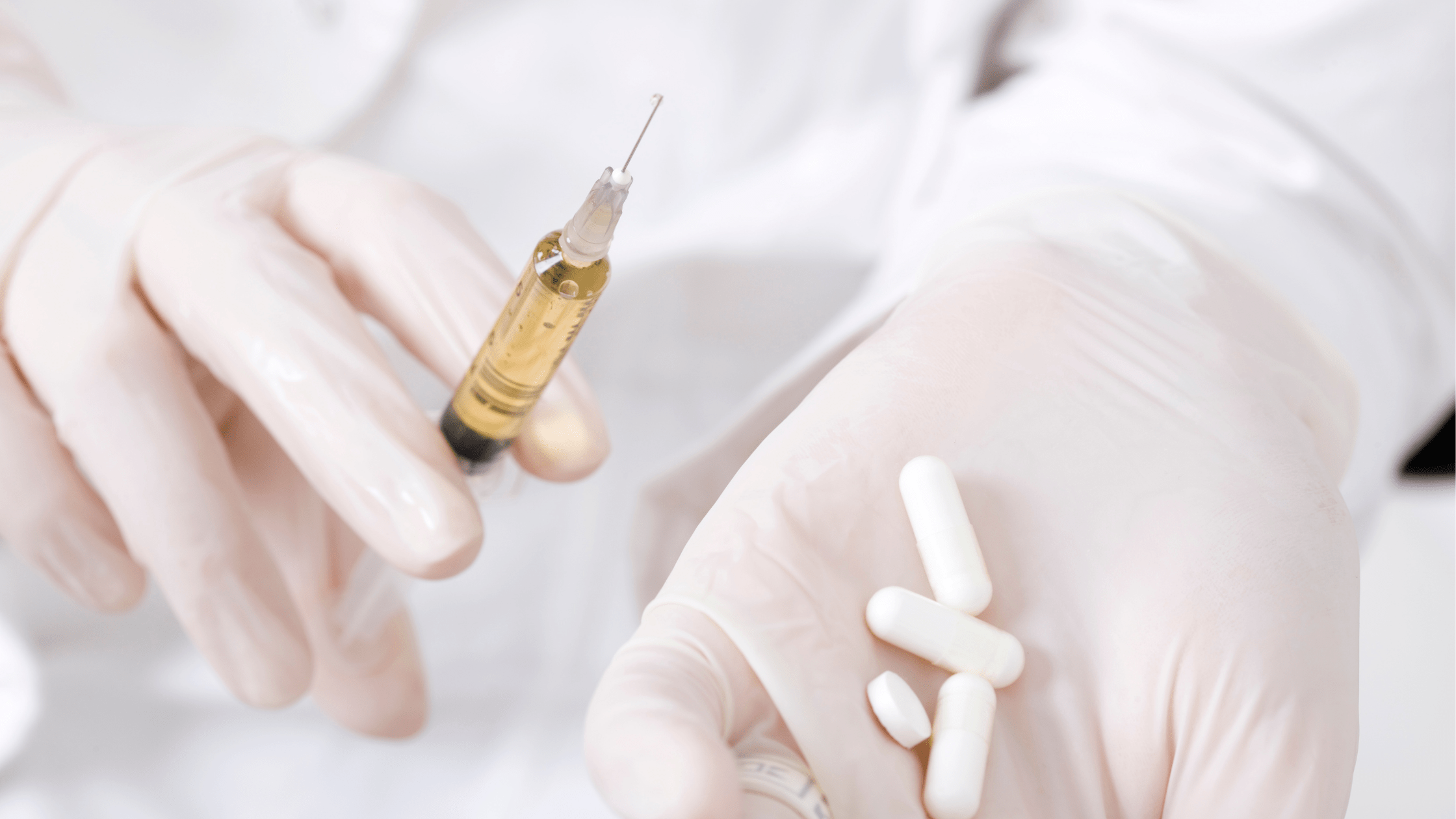
An intramuscular injection skips the entire GI system. The B12 goes directly into muscle tissue, from which it absorbs into your bloodstream at close to 100% bioavailability. There's no stomach acid dependency. No intrinsic factor requirement. No variability based on what you ate or what medications you're taking.
| Delivery Method | Route | Approximate Bioavailability | Gut Dependency |
|---|---|---|---|
| Oral tablet (high dose) | Passive GI absorption | 1–2% | High |
| Oral tablet (normal dose) | Intrinsic factor dependent | Up to 56%* | High |
| Sublingual | Oral mucosa absorption | ~50% (variable) | Moderate |
| Intramuscular injection What we offer | Direct to muscle tissue | ~100% | None |
*Only when intrinsic factor is functioning normally. People with GI conditions, on PPIs, or over 50 absorb significantly less.
We use pharmaceutical-grade methylcobalamin — the active, bioidentical form of B12 that your body uses directly. No conversion step required.
What the shot actually feels like
I'll be quick about this because there's not much to say: it's a small needle into your deltoid (upper arm), similar in feel to a flu shot. A brief pinch, maybe two seconds of mild pressure while the solution goes in, and then it's done.
The whole process — check-in, quick intake if it's your first time, injection, a minute to make sure you feel fine — takes about five minutes. You can add it to the end of any facial, laser treatment, or injectable appointment. Or you can come in just for the shot. Either way works.
A few people feel a very mild ache at the injection site for a few hours afterward, similar to what happens after a vaccine. Most feel nothing. There's no downtime, no aftercare, no recovery. You can drive yourself and go straight back to your day.
Where we inject: Deltoid muscle (upper arm) — the same site used for most adult IM injections. It's accessible, comfortable, and reliably absorbs well.
How often should you get one
This varies based on what you're trying to accomplish and what your baseline looks like. Here's how I think about it in general terms:
If you're trying to replenish low levels: Weekly injections for four to six weeks is a reasonable starting protocol. This builds your stores quickly so you can feel the difference and then maintain from there.
Ongoing maintenance: Once a month is where most people land — enough to keep levels steady without over-managing it. Some people prefer every two weeks. It depends on your absorption situation and how you respond.
As a regular add-on: A lot of our clients add a B12 shot to their monthly facial or injectable appointment. It's five minutes, it's inexpensive, and it's one less thing to remember as a supplement. That cadence works well for healthy people who just want to stay ahead of fatigue and cognitive clarity.
If you have a diagnosed absorption condition or a confirmed deficiency, I'd want to talk through your specific situation before recommending a frequency. We can do that at your first visit — there's no pressure to commit to a schedule before you've seen how you respond.
Vitamin & Wellness Shots · New Age Medspa · Anchorage, AK
B12 Injection
Pharmaceutical-grade methylcobalamin. Administered by our FNP injectors. Five-minute appointment — add on to any visit or come in just for the shot. No prescription required.
A note on expecting results
I want to set honest expectations here, because I think this matters more than making a sale.
If you're genuinely B12 deficient, the difference after a series of injections can be significant — better energy, clearer thinking, improved mood, reduction in tingling. Patients who've been depleted for a while sometimes describe it as a fog lifting.
If your B12 levels are normal, an injection isn't going to give you superhuman energy or transform your productivity. What it can do is keep your levels from dipping, support red blood cell production, and ensure your nervous system has what it needs to function well. That's not nothing — but I'd rather you have accurate expectations than feel disappointed.
The people who tend to feel the most noticeable difference are those who were already low — whether they knew it or not. If you've been chronically fatigued with no clear explanation, it's genuinely worth trying. The cost is low, the risk is essentially zero, and if it works, you'll know within a few weeks.
Your questions
Frequently asked about B12 shots
A single B12 injection is $25. We also offer a Buy 4, Get 1 Free bundle — no expiration date, tracked in your chart automatically, and you can mix and match with any of our other wellness shots. So if you want three B12 and one Glutathione, that counts toward the bundle. No codes, no paperwork.
For most people, weekly injections for four to six weeks is a solid starting protocol if you're trying to rebuild depleted stores. After that, monthly or as-needed works well for maintenance. If you have a known absorption issue — like pernicious anemia, Crohn's, or you're on metformin — the cadence might look different, and we'll talk through your situation at your first visit before committing to anything.
A quick pinch — essentially the same as a flu shot. We inject into the deltoid (upper arm). The injection itself takes a few seconds. Most people feel nothing at the site within an hour. A few notice mild soreness, similar to post-vaccine ache, that resolves on its own. No downtime, no aftercare needed. You can drive yourself and go straight back to your day.
No. B12 is water-soluble, which means your body excretes anything it doesn't use — there's no meaningful risk of toxicity, so we don't require lab work before starting. That said, if you suspect a significant deficiency or have an underlying condition affecting absorption, it's worth knowing your actual serum B12 level. Your primary care provider can order that. If you have recent labs, bring them and we can talk through what they mean for your frequency and protocol.
Yes — and that's one of the most convenient things about how we've set this up. A B12 shot adds about five minutes to the end of any other appointment. SkinPen microneedling, LaseMD Ultra, neurotoxin, a medical facial — add it to any of those. You can also come in just for the shot if that's all you need. No minimum, no required bundling with other services.
We're a cash-pay medspa — we don't bill insurance. At $25, a B12 shot is one of the most accessible wellness investments you can make, and it's often less than a copay for a primary care visit. We accept all major credit cards and have payment plan options for larger treatment packages if you're ever interested in combining with something else.